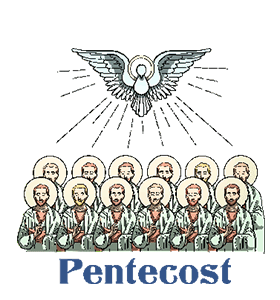
The Observance of Pentecost is a Christian holiday that commemorates the descent of the Holy Spirit upon the Apostles and other followers of Jesus Christ. Pentecost holds a unique relevance for millions of citizens, as the EU traces its roots to the Christian values and principles promoted by its founding fathers. This celebration serves as a reminder of the diverse cultural heritage that has shaped the region.
The history of Pentecost dates back to the Jewish tradition of celebrating Shavuot, which also commemorated the giving of the Torah at Mount Sinai. It was during this celebration that the biblical event of the Holy Spirit's descent took place, as recorded in the book of Acts. This event came to be venerated as the birth of the Church, symbolizing the manifestation of the Holy Spirit and marking the beginnings of a new spiritual community.
Pentecost is celebrated on the 50th day after Easter. Pentecost falls on a Sunday, making it a movable feast that varies in date each year. This day offers an opportunity for reflection and appreciation of the shared spiritual heritage that binds the European Union together.
Top 10 Facts for 2026 Pentecost / Whit Sunday in the EU
Known for its association with the Birthday of the Church theme, Pentecost is observed as a major public holiday across many European Union member states, including Germany, Austria, Belgium, and Hungary, where Whit Monday typically provides a three-day weekend for the workforce.
In France, the holiday is uniquely defined by the 2004 establishment of the Day of Solidarity, a policy where employees often work without extra pay to fund support for the elderly and disabled, though the specific date for this contribution can now vary by company.
Travelers in the Mediterranean frequently search for information regarding the "second peak season" for tourism, as the long weekend triggers a massive surge in demand for campsites and coastal resorts across Italy, Croatia, and Spain.
One of the most visually striking traditions occurs in Rome, where thousands of rose petals are dropped from the oculus of the Pantheon at the conclusion of the mass to symbolize the Descent of the Holy Spirit.
In the Bavarian Forest of Germany, the annual Kötzting Whitsun Ride attracts over 800 participants for one of the largest horseback pilgrimages in Europe, a tradition dating back to the 15th century.
The town of Echternach in Luxembourg hosts the UNESCO-listed Dancing Procession of Echternach on the Tuesday following the holiday, where participants perform a rhythmic hopping dance through the streets to the sound of traditional folk tunes.
Liturgical celebrations often feature the ancient hymn Veni Creator Spiritus, while many cathedrals display classic artworks like Giotto’s Pentecost to illustrate the biblical narrative of the "tongues of fire."
In Poland and other Central European regions, the holiday is colloquially known as the Green Holiday due to the widespread custom of decorating homes, churches, and even livestock with birch branches and fresh greenery to celebrate the arrival of late spring.
Retail and transportation availability is a primary concern for residents, as most supermarkets and shopping centers in countries like Germany and Austria remain strictly closed on both Sunday and Monday, while rail networks often operate on a reduced Sunday schedule.
The name "Whitsun," primarily used in the United Kingdom and Ireland, is derived from the "White Sunday" custom of newly baptized Christians wearing white garments, a practice that historically coincided with this liturgical season.
In the News and Trending in the EU for Pentecost / Whit Sunday
Top things to do in the EU for Pentecost
Pentecost is a particularly appropriate day to join a church. In the early church, it was a day when the newly converted, after a period of preparation, were baptized.
Some churches stress mission around Pentecost. See what your local church is doing to help your community and get involved.
Celebrate Pentecost by watching a documentary about Christianity in the European Union. Here are some suggestions: 1. Charismatic Renewal in Europe: From the 1960s to 2000s - This documentary explores the history of the Charismatic Renewal movement within the European Union, which has its roots in the experiences of Pentecost. It features interviews with key figures and offers insight into its impact on European Christianity. 2. Pentecostal Europe - This documentary examines the growth of Pentecostalism within Europe, exploring its historical roots, theological distinctives, and social impact in various EU countries. 3. The Holy Spirit in a Changing Europe - Focusing on the role of the Holy Spirit in shaping the religious and cultural landscape in Europe, this documentary explores various Christian traditions, including those with ties to Pentecost. 4. The Road to Rome: Europe's Journey to the Holy Spirit - This documentary chronicles the European Union's historical journey towards a deeper understanding of the role of the Holy Spirit, including the Spirit's work at Pentecost. It highlights the events that have shaped the EU's stance on Christianity and religious freedom.
Attend a local Pentecost fair. In various European countries, such as the Netherlands, Hungary, and Poland, Pentecost is celebrated with outdoor fairs that include food stalls, arts, and crafts markets, games, and live music performances.